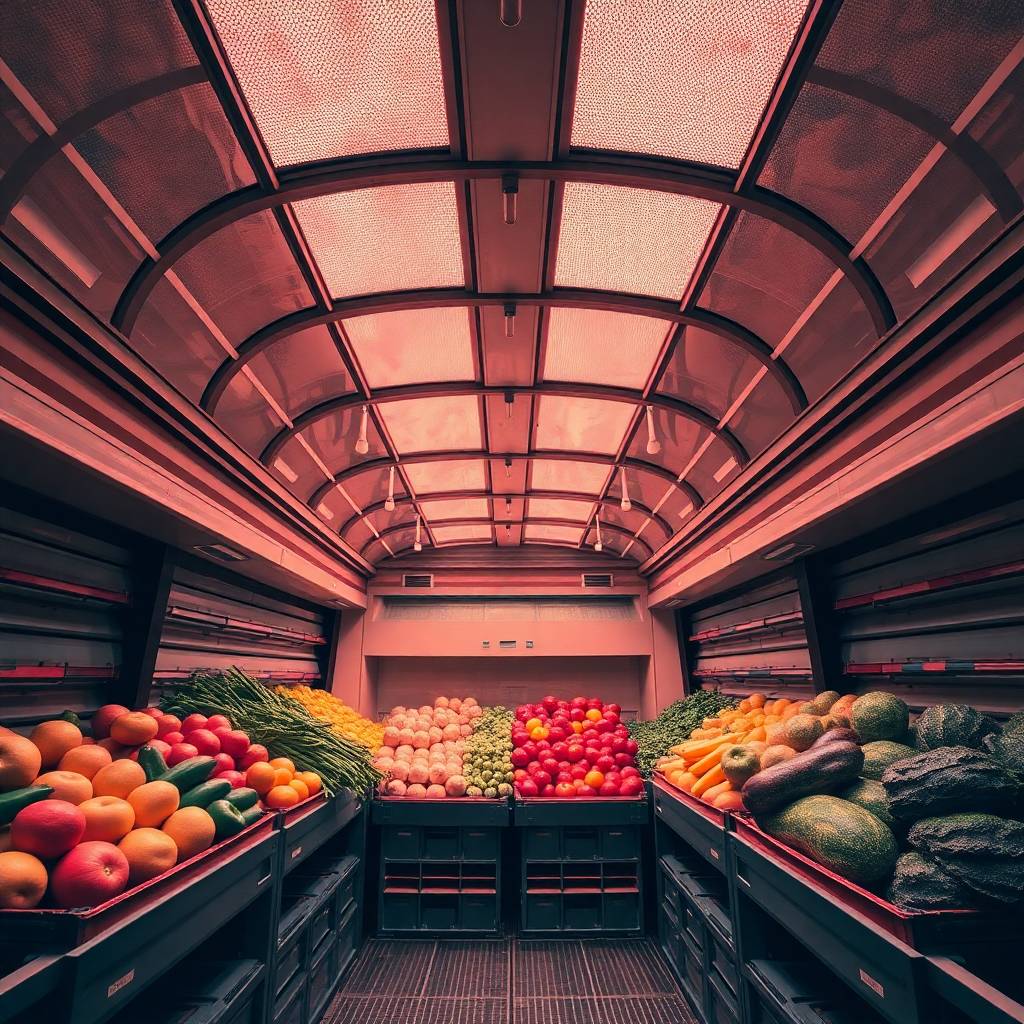
ISO/TS 22002-5:2025 is published by the International Organization for Standardization (ISO) and defines ISO/TS 22002-5:2025 food safety prerequisite programs for logistics applicable to food transport, storage, and distribution operations.
ISO/TS 22002-5:2025 Explained – The Global Food Safety Standard for Logistics
ISO/TS 22002-5:2025 is an internationally recognized technical specification that defines prerequisite programs (PRPs) for food safety in logistics operations, including transport, storage, and distribution. It supports ISO 22000–based Food Safety Management Systems (FSMS) by establishing standardized hygiene, temperature control, sanitation, and traceability requirements across the food logistics chain.
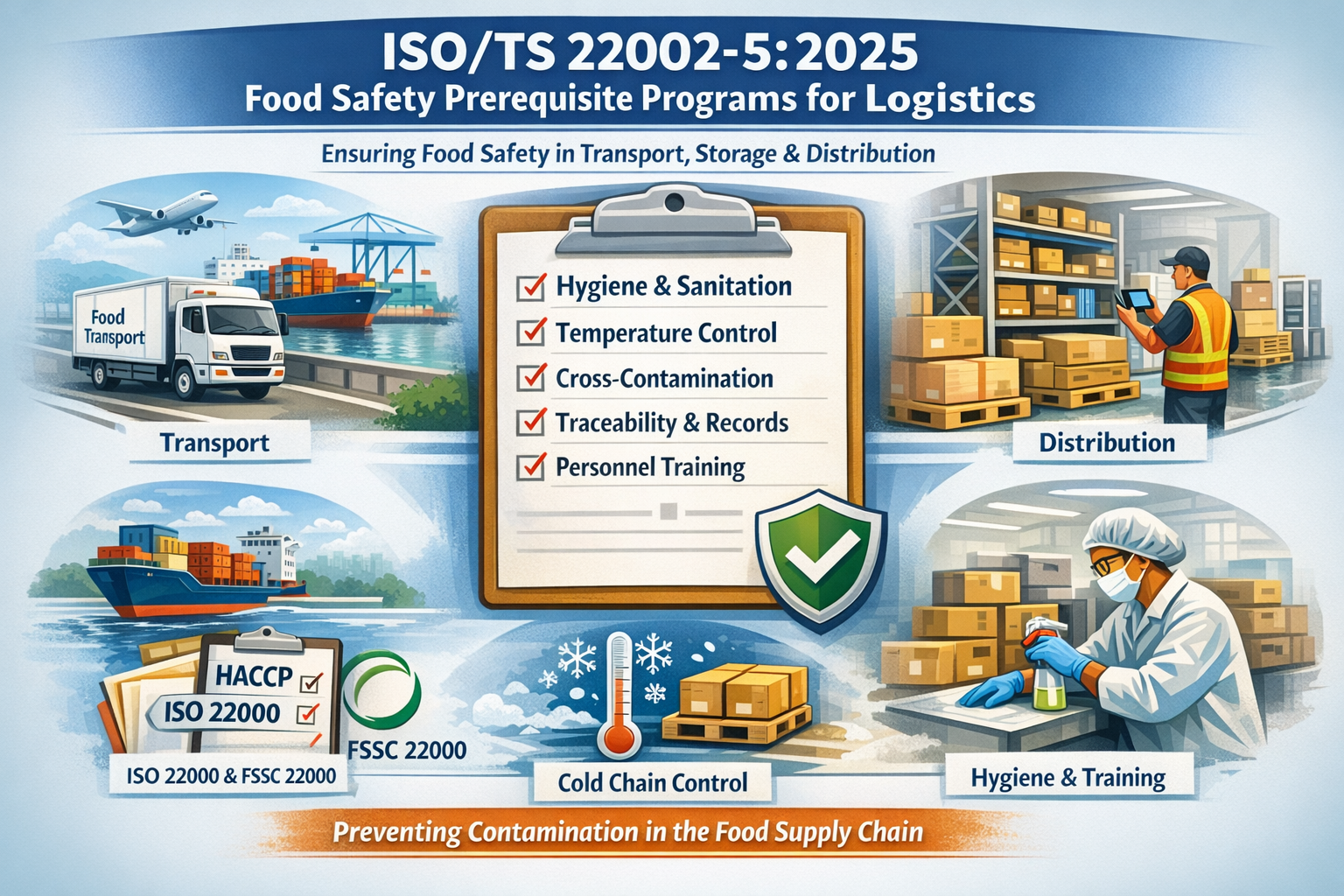
As global food supply chains become longer, faster, and more complex—especially with cold chains, quick commerce, and third-party logistics—ISO/TS 22002-5:2025 acts as the operational backbone of food safety in logistics.
What is ISO/TS 22002-5:2025?
ISO/TS 22002-5:2025 is a sector-specific prerequisite program standard developed for organizations involved in food transport, storage, warehousing, and distribution. Unlike ISO 22000, which defines overall FSMS requirements, ISO/TS 22002-5 focuses exclusively on practical, on-ground hygiene and risk control measures needed to prevent contamination during food movement and handling.
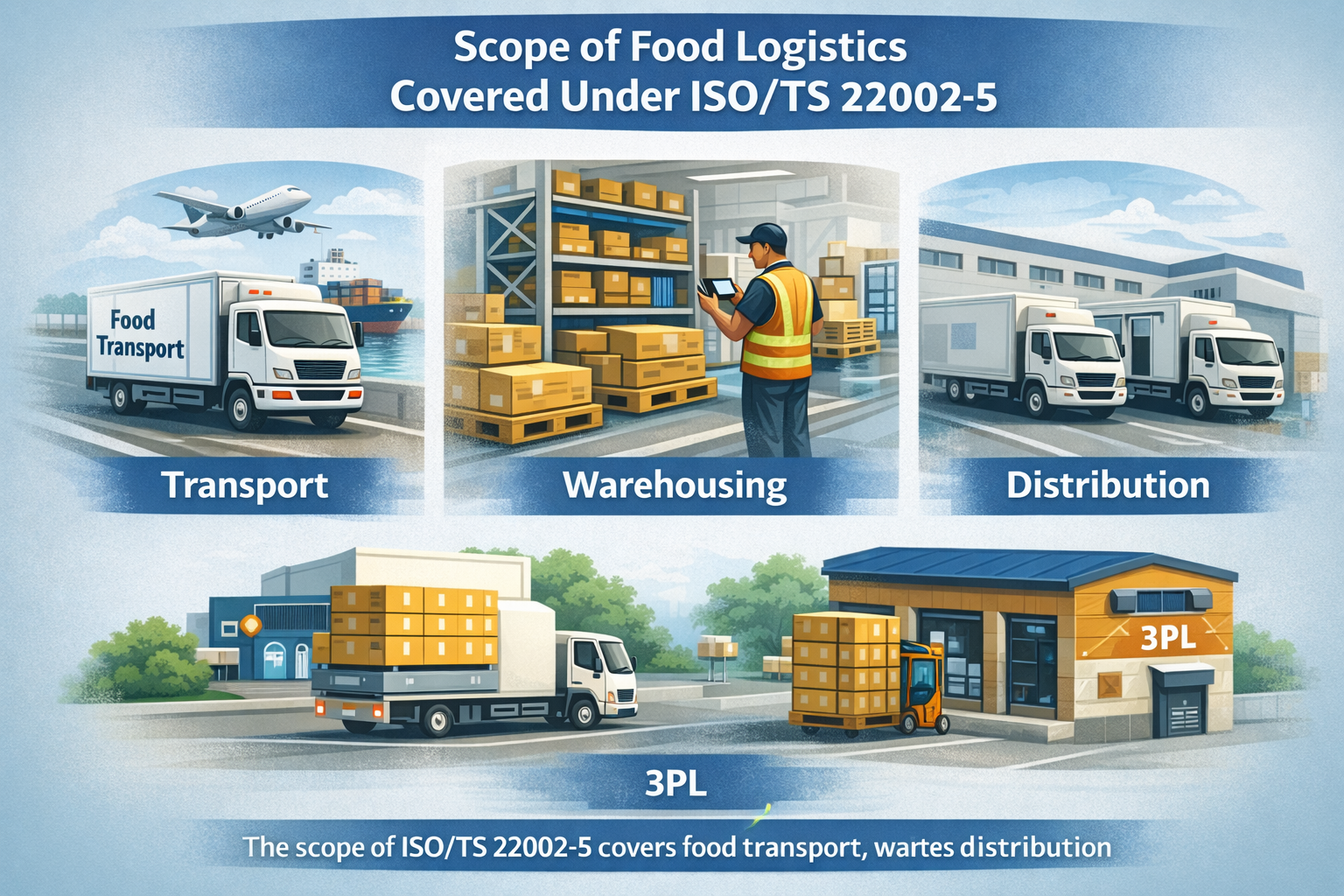
Who does it apply to?
- Food transport operators
- Cold chain logistics providers
- Warehouses and distribution centers
- Third-party logistics (3PL) companies handling food
- Exporters and importers managing food logistics
The standard is commonly used as a supporting PRP document for ISO 22000 and FSSC 22000 certification, particularly where logistics activities represent a significant food safety risk.
Why Food Logistics Needed a Separate ISO Standard
Global public health agencies, including WHO, highlight logistics as a critical risk area in WHO food safety guidance for transport and handling of food products.
Food safety risks in logistics are fundamentally different from manufacturing risks. They include:
- Temperature abuse during transit
- Cross-contamination between loads
- Poor vehicle hygiene
- Inadequate cleaning between consignments
- Human handling errors during loading and unloading
ISO/TS 22002-5:2025 addresses these gaps by defining uniform minimum hygiene and control requirements that can be consistently applied across different logistics environments, geographies, and transport modes.
Key Requirements of ISO/TS 22002-5:2025
Vehicle and Container Hygiene
All vehicles, containers, pallets, and handling equipment must be designed, maintained, and cleaned to prevent contamination. Cleaning procedures must be documented, validated, and verified based on food safety risk.
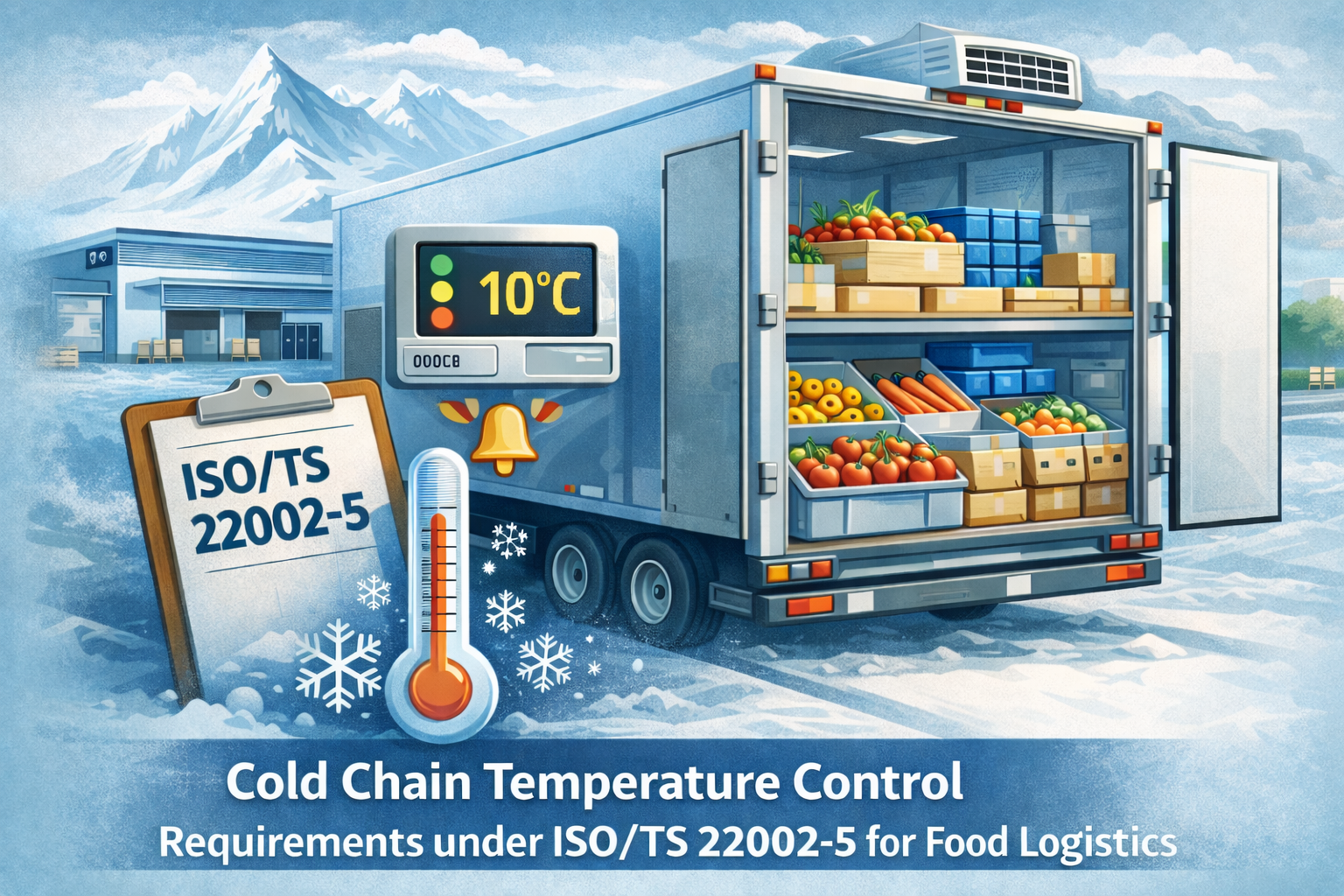
Temperature Control and Cold Chain Integrity
The standard requires continuous temperature control for chilled, frozen, and temperature-sensitive foods. Monitoring systems, alarms, deviation handling, and corrective actions must be in place to protect product safety throughout transport and storage.
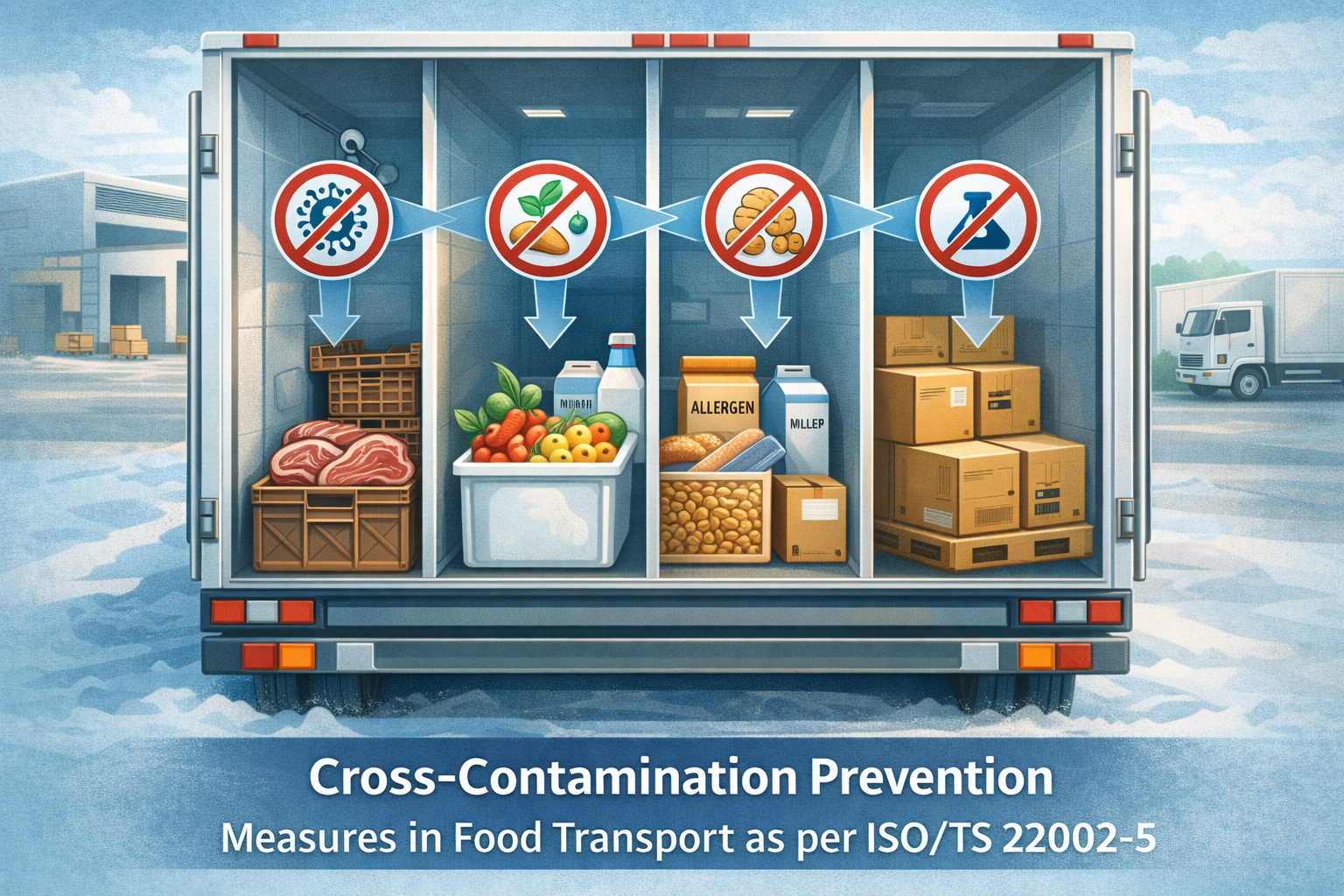
Prevention of Cross-Contamination
ISO/TS 22002-5 mandates controls to prevent contamination between:
- Raw and ready-to-eat foods
- Allergen-containing and non-allergen products
- Food and non-food cargo
Physical segregation, scheduling controls, and sanitation verification are critical requirements.
Cleaning and Sanitation Programs
Logistics operators must implement structured cleaning schedules, approved detergents and disinfectants, sanitation verification methods, and record-keeping systems aligned with food safety risks.
Traceability and Documentation
The standard emphasizes full traceability of food consignments, including:
- Transport conditions
- Cleaning and sanitation logs
- Vehicle allocation records
- Incident and deviation reports
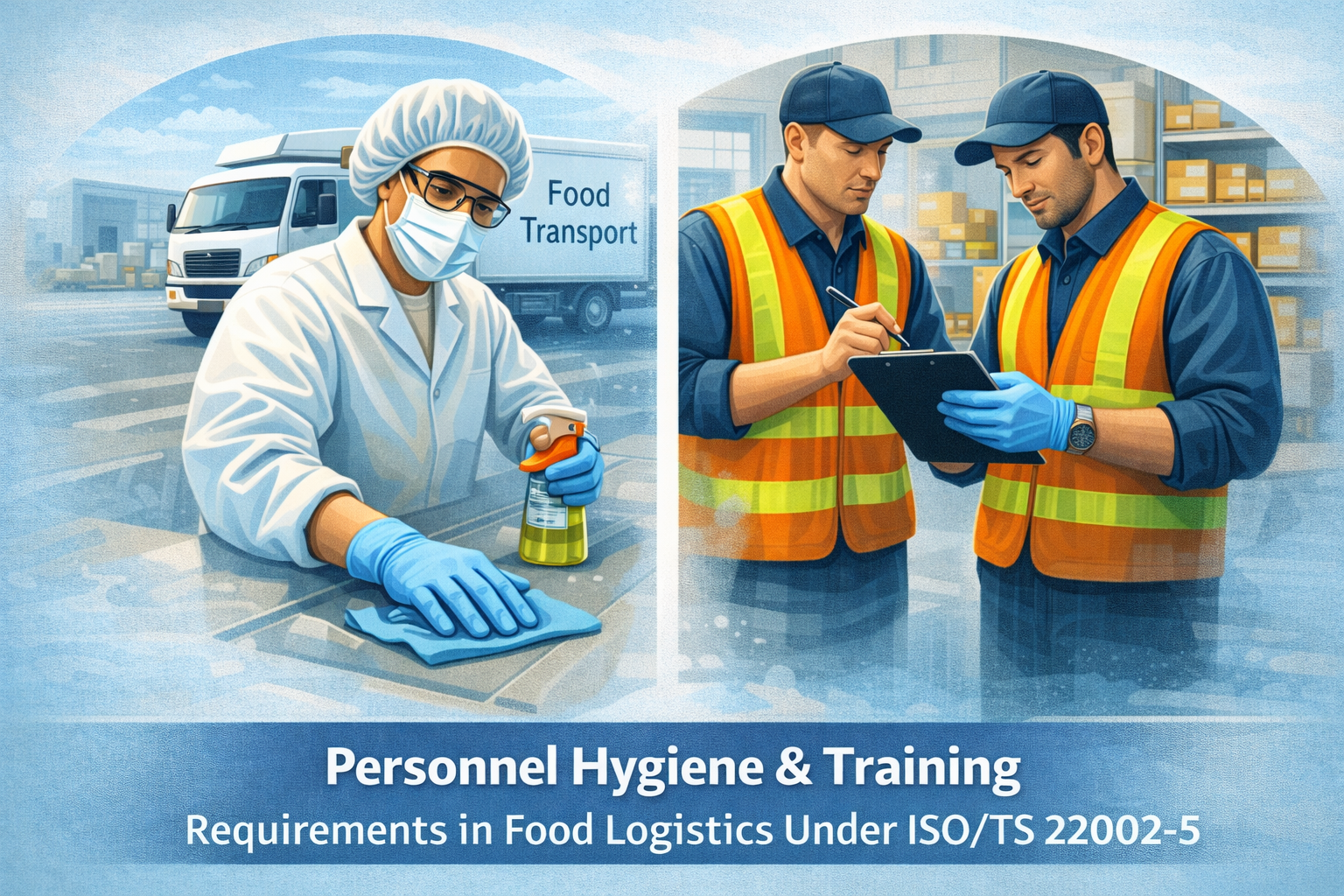
Personnel Hygiene and Training
Personnel involved in food logistics must be trained in food safety principles, hygiene practices, and contamination risks specific to transport and storage operations.
Risk Assessment in Food Transport
Organizations must proactively assess risks related to:
- Transport routes
- Seasonal temperature variations
- Equipment failure
- Delays and emergency situations
Risk-based controls are a central theme of ISO/TS 22002-5:2025.
Relationship with ISO 22000, HACCP, and FSSC 22000
The requirements of ISO/TS 22002-5:2025 are aligned with the Codex Alimentarius General Principles of Food Hygiene, which form the global foundation for food safety risk control.
ISO/TS 22002-5:2025 aligns closely with:
- ISO 22000 Food Safety Management Systems
- HACCP principles
- Codex Alimentarius food hygiene guidelines
- FSSC 22000 certification scheme requirements for transport and storage
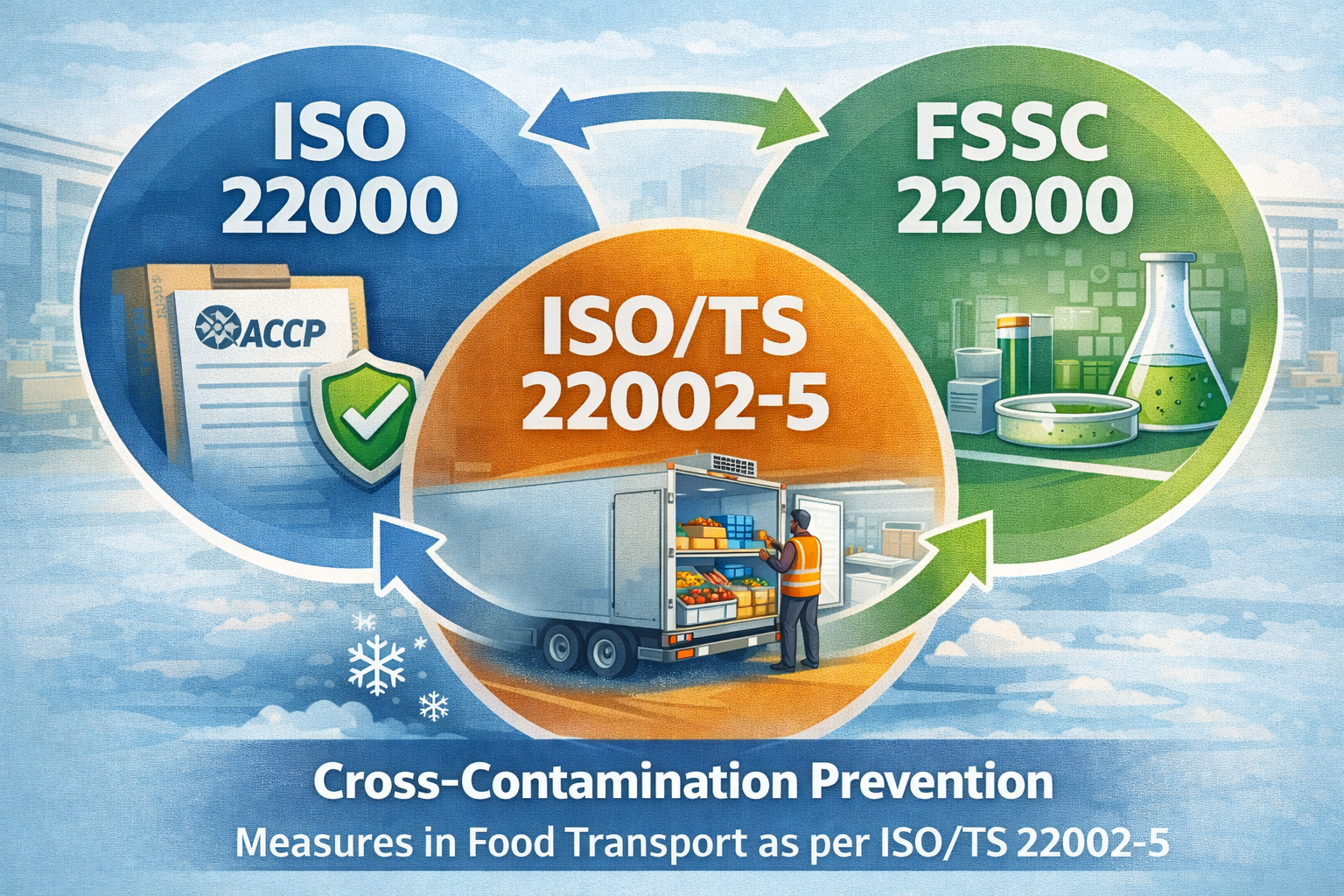
Within the FSSC certification framework, ISO/TS 22002-5 is referenced as a supporting document for FSSC 22000 transport and storage prerequisite program requirements. Together, these frameworks form an integrated Food Safety Management System (FSMS) that ensures food safety is controlled not only during processing, but also during movement, storage, and distribution.
ISO/TS 22002-5:2025 supports organizations implementing the ISO 22000 food safety management system standard by strengthening logistics-specific prerequisite programs.
Why ISO/TS 22002-5:2025 Matters for Modern Food Supply Chains
With the growth of:
- Cold chain logistics
- Quick commerce and food delivery
- International food trade
- Outsourced warehousing and transport
According to FAO guidance on food safety risks in global food supply chains, logistics failures are a major source of contamination beyond food manufacturing facilities.
Food safety failures increasingly occur outside factories. ISO/TS 22002-5:2025 provides a globally harmonized way to manage these risks, protect brand integrity, and comply with regulatory and customer expectations.
Official References and Authoritative Resources
Below are direct links to official and authoritative sources related to ISO/TS 22002-5 and food logistics hygiene:
- ISO Catalogue – ISO/TS 22002-5:2025
https://www.iso.org/standard/83668.html - Codex Alimentarius – General Principles of Food Hygiene (CXC 1-1969)
https://www.fao.org/fao-who-codexalimentarius/codex-texts/codes-of-practice/en/ - FSSC 22000 – Transport and Storage PRP Requirements
https://www.fssc.com/schemes/fssc-22000/documents/
These documents collectively define the global best practices for food safety in logistics and transport.
ISO/TS 22002-5:2025 – Quick Summary for Food Logistics Professionals
- ISO/TS 22002-5:2025 defines prerequisite programs for food safety in logistics operations.
- It applies to food transport, storage, warehousing, and distribution activities.
- The standard supports ISO 22000 and FSSC 22000 certification by controlling logistics-specific food safety risks.
- Core focus areas include hygiene, temperature control, cross-contamination prevention, traceability, and personnel training.
Frequently Asked Questions (FAQs)
1. What is ISO/TS 22002-5:2025?
ISO/TS 22002-5:2025 is a technical specification that defines prerequisite programs (PRPs) for food safety in logistics, including food transport, storage, warehousing, and distribution operations.
2. Who needs ISO/TS 22002-5:2025 certification?
The standard applies to food logistics operators, such as transporters, cold chain providers, warehouses, distribution centers, and third-party logistics (3PL) companies handling food products.
3. Is ISO/TS 22002-5 mandatory?
No, ISO/TS 22002-5 is not legally mandatory, but it is widely required by customers, certification schemes, and global food supply chains as a best-practice food safety standard.
4. How is ISO/TS 22002-5 different from ISO 22000?
ISO 22000 defines overall Food Safety Management System (FSMS) requirements, while ISO/TS 22002-5 focuses specifically on operational hygiene and control measures for food logistics activities.
5. Does ISO/TS 22002-5 apply only to cold chain logistics?
No. While cold chain control is a major focus, ISO/TS 22002-5 applies to all food logistics, including ambient transport, dry storage, frozen foods, and mixed cargo operations.
6. What temperature ranges does ISO/TS 22002-5 require?
The standard does not mandate a single temperature value. It requires product-specific temperature control, monitoring, deviation handling, and documented corrective actions based on food safety risk.
7. Does ISO/TS 22002-5 cover cross-contamination risks?
Yes. Preventing cross-contamination between raw foods, ready-to-eat foods, allergens, chemicals, and non-food cargo is a core requirement of ISO/TS 22002-5.
8. Is ISO/TS 22002-5 required for FSSC 22000 certification?
Yes. For transport and storage operations, ISO/TS 22002-5 is commonly used as the PRP reference standard within the FSSC 22000 certification scheme.
9. Can a logistics company be ISO/TS 22002-5 compliant without ISO 22000?
Yes. A company can implement ISO/TS 22002-5 independently, but it is most effective when integrated into an ISO 22000–based FSMS.
10. What documentation is required under ISO/TS 22002-5?
Key documents include cleaning schedules, sanitation records, temperature logs, vehicle hygiene records, training records, risk assessments, and incident reports.
11. Does ISO/TS 22002-5 cover personnel hygiene?
Yes. The standard includes requirements for personnel hygiene, training, behavior, and food safety awareness for all staff involved in food logistics.
12. Is vehicle design addressed in ISO/TS 22002-5?
Yes. Vehicles and containers must be designed to prevent contamination, allow effective cleaning, and maintain required temperature conditions.
13. Does ISO/TS 22002-5 apply to international food transport?
Yes. The standard is internationally applicable and widely used in global food trade, exports, imports, and cross-border logistics operations.
14. How does ISO/TS 22002-5 support food traceability?
It requires traceability of food consignments, including transport conditions, handling records, cleaning history, and deviation management.
15. Is risk assessment mandatory in ISO/TS 22002-5?
Yes. Organizations must identify and manage logistics-specific food safety risks, including route risks, seasonal variations, equipment failure, and delays.
16. How often should cleaning and sanitation be performed?
Cleaning frequency must be risk-based, documented, and validated depending on the type of food, transport conditions, and contamination risk.
17. Does ISO/TS 22002-5 cover allergen control?
Yes. The standard requires controls to prevent allergen cross-contact, including segregation, cleaning validation, and labeling awareness.
18. Is training mandatory under ISO/TS 22002-5?
Yes. Personnel must receive regular food safety and hygiene training relevant to their logistics activities and responsibilities.
19. What are the benefits of implementing ISO/TS 22002-5?
Benefits include reduced contamination risk, improved customer trust, easier certification audits, better cold chain control, and alignment with global food safety expectations.
20. How long does it take to implement ISO/TS 22002-5?
Implementation time varies but typically ranges from 2 to 6 months, depending on organization size, logistics complexity, and existing food safety systems.


Leave a reply to Post-Harvest Management of Fruits and Vegetables: Role of Relative Humidity in Storage and Transportation – scmzz Cancel reply