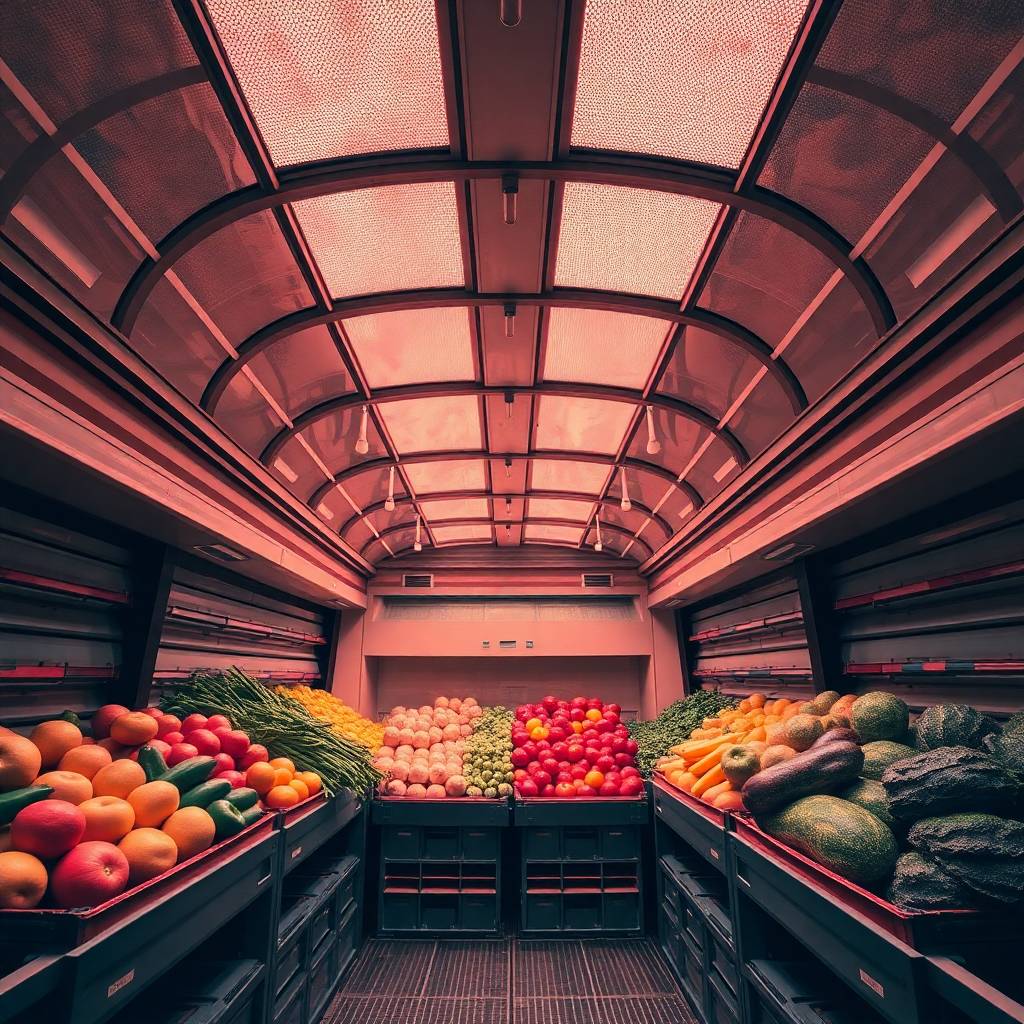
Quick commerce and food delivery are converging into a single hyperlocal logistics battlefield. Explore how dark stores, cold chain, EV last-mile, infrastructure, and unit economics will shape the global and Indian market between 2025 and 2030.
Quick Commerce vs Food Delivery: The Global & India Logistics Battle (2025–2030)
Quick commerce (Q-commerce) is a hyperlocal supply chain model that delivers groceries and essentials within 10–15 minutes using micro-fulfilment dark stores, AI-driven demand forecasting, and high-speed last-mile logistics. It is now converging with traditional food delivery platforms, creating a global competition for speed, reliability, and profitability.
1. Global Market Context: A Convergence of Models
The boundary between grocery quick commerce and restaurant food delivery is collapsing worldwide. Platforms such as Blinkit, Zepto, Instamart, Instacart, DoorDash, Uber Eats, Getir, and Gopuff are all evolving into hyperlocal fulfilment ecosystems.
According to global quick commerce market growth forecasts by Statista, the sector is expected to grow at over 25% CAGR through 2030, driven by urban density, mobile penetration, and consumer demand for immediacy.
Strategically, the market is shifting from “who owns the customer app” to “who controls the fastest and most reliable supply chain within a 3 km radius.”
2. Dark Stores & Micro-Fulfilment: The Urban Factory
Modern Q-commerce is built on micro-fulfilment centers (dark stores) designed for:
- Ultra-fast picking
- High SKU velocity
- Temperature zoning
- Rider throughput
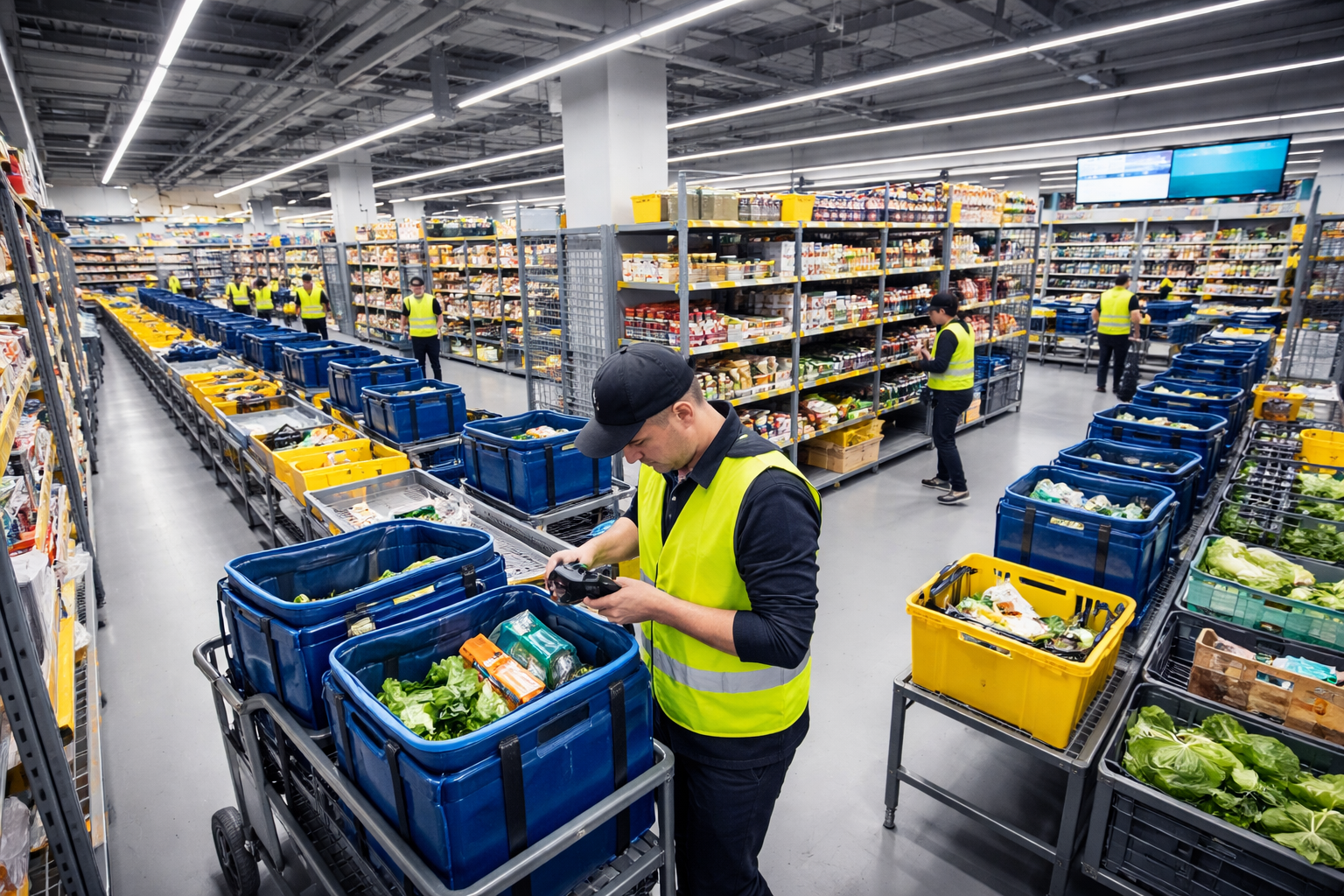
Research on micro-fulfilment centers in urban logistics by McKinsey shows that optimized layout and partial automation can reduce order picking time by 30–45%, directly improving SLA and cost per order.
Typical dark store design parameters:
| Metric | Range |
|---|---|
| Service radius | 1–3 km |
| SKU count | 2,000–6,000 |
| Pick time | 60–120 sec |
| Dispatch time | < 60 sec |
| Daily orders | 1,500–4,000 |
These facilities are no longer warehouses; they are urban distribution reactors.
3. Cold Chain: The Real Competitive Moat
In both India and global markets, cold chain integrity is the most fragile and expensive component.
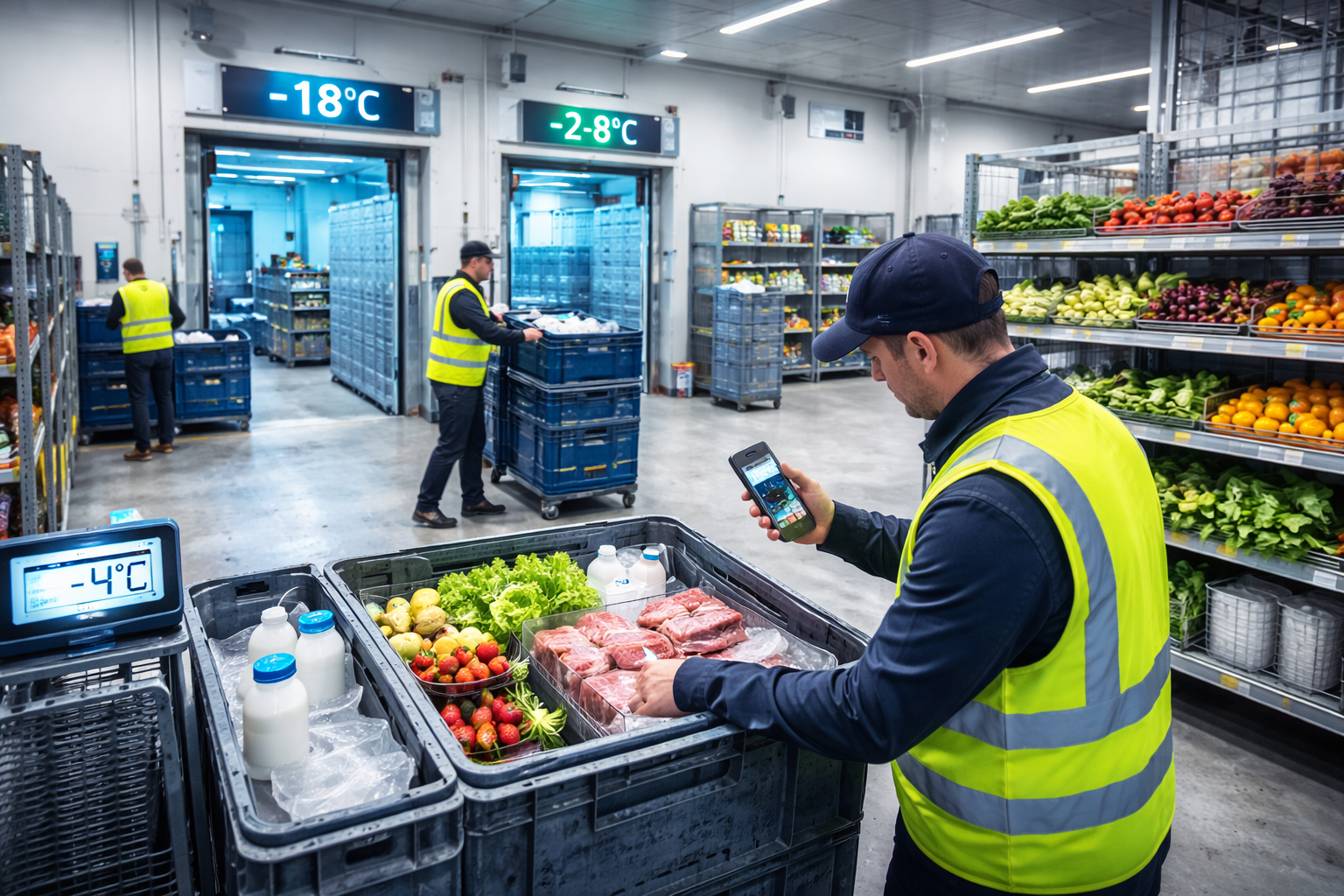
The importance of thermal control is highlighted in FAO cold chain guidelines for perishable food logistics, which stress that last-mile temperature abuse causes more quality degradation than long-haul refrigerated transport.
Critical technologies include:
- Phase Change Materials (PCM) in insulated totes
- Eutectic plates for thermal buffering
- Multi-zone dark store refrigeration
- IoT temperature logging
Engineering benchmarks are defined by ASHRAE guidelines for refrigerated transport and storage, which specify insulation values, compressor sizing, and heat load calculations for chilled and frozen distribution.
Strategic reality:
In Q-commerce, cold chain reliability becomes a brand differentiator, not merely a compliance requirement.
4. EV Last-Mile and Urban Infrastructure
Across Asia, Europe, and the Middle East, EV two-wheelers and light vans dominate last-mile delivery. The IEA’s report on electric vehicles in urban freight shows that electrification can reduce operating cost by 20–30% in dense cities while improving regulatory compliance.
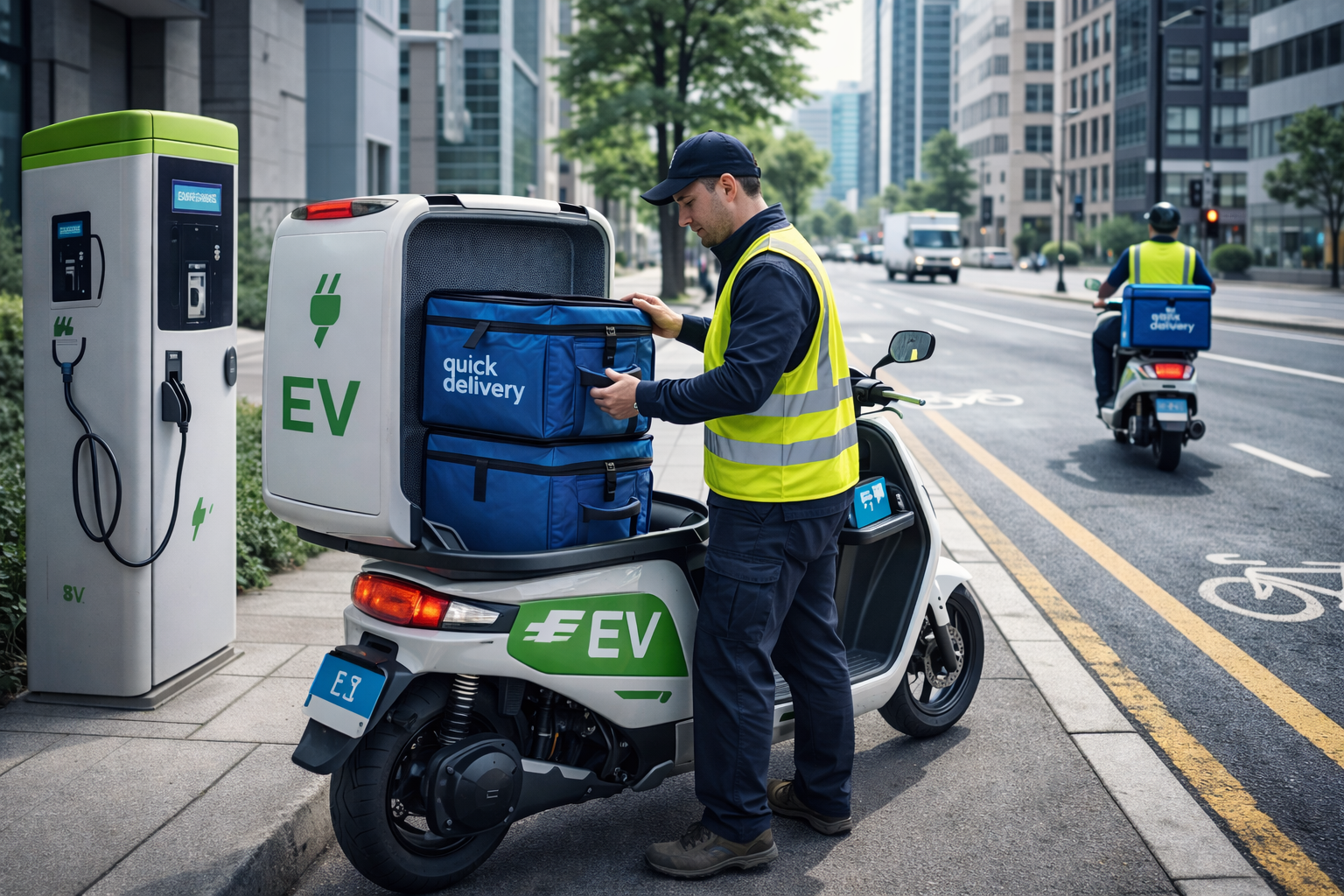
However, speed is constrained less by vehicle technology and more by:
- Road quality
- Traffic congestion
- Charging infrastructure
- Zoning laws for dark stores
In India, systemic bottlenecks are clearly outlined in NITI Aayog’s urban infrastructure and logistics efficiency report, which links poor road geometry and power reliability directly to higher delivery cost and SLA failures.
5. Unit Economics of a 10-Minute Order
| Cost Component | Share |
|---|---|
| Dark store rent & utilities | 20–25% |
| Labor (pickers + riders) | 25–30% |
| Cold chain energy | 10–15% |
| Packaging & PCM | 8–12% |
| Last-mile transport | 15–20% |
| Technology & overhead | 5–10% |
Without automation, private labels, and AI-driven demand forecasting, most models remain structurally loss-making.
6. Strategic Outlook: 2025–2030
What Will Separate Winners from Casualties
- Infrastructure Advantage – Cities with strong power, roads, and zoning will dominate Q-commerce viability.
- Cold Chain Excellence – Thermal integrity will define trust and repeat purchase.
- Dark Store Automation – Robotics and high-density storage will compress picking time.
- Platform Convergence – Food delivery will add inventory; Q-commerce will add ready-to-eat.
- AI Forecasting – Waste reduction and stock accuracy will drive margins.
7. India vs Global Comparison
| Parameter | India | US / Europe | Middle East |
|---|---|---|---|
| Population density | Very high | Medium | Medium |
| Infrastructure | Uneven | Strong | Strong |
| Labor cost | Low | High | Medium |
| Cold chain maturity | Developing | Advanced | Advanced |
| Profit model | Volume-driven | Margin-driven | Premium speed |
India’s strength is order density; its constraint is infrastructure quality.
8. The 2030 Vision: Hyperlocal Fulfilment Platforms
By 2030, dominant players will operate:
- Integrated grocery + meal + pharmacy platforms
- AI-orchestrated micro-fulfilment
- Electrified last-mile fleets
- High-integrity cold chain
- Dark stores as automated urban distribution hubs
FAQ
Q1. What is quick commerce?
Quick commerce is a hyperlocal delivery model providing groceries and essentials within 10–15 minutes using dark stores and high-speed logistics.
Q2. How is it different from food delivery?
Food delivery connects restaurants to consumers; quick commerce owns inventory and focuses on speed and cold chain reliability.
Q3. Why is cold chain critical in Q-commerce?
Because thermal abuse risk is highest during picking and last-mile, directly impacting food safety and quality.
Q4. Will Q-commerce be profitable by 2030?
Yes, with automation, private labels, optimized routing, and infrastructure-backed dark store networks.
Written from a food supply chain and cold chain engineering perspective with experience in packhouse operations, temperature-controlled logistics, and last-mile delivery systems.


Leave a reply to Post-Harvest Management of Fruits and Vegetables: Role of Relative Humidity in Storage and Transportation – scmzz Cancel reply